Health is more than diet and exercise
I believe it’s eight things
- Sleep
- Joy
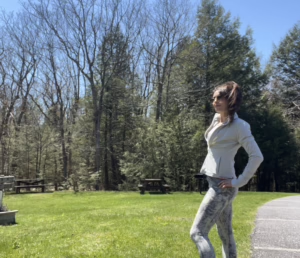
- Movement
- Stress
- Food
- Relationships
- Environment
- Purpose
Ask most people what health is and they will name two things. Eat well. Exercise. I did both, completely, for years, and I still ended up in surgery twice.
Diet and Exercise Did Not Save Me From Surgery
By any conventional scoring I was doing health correctly, and I had been doing it correctly for years. Then I developed fibroids and ended up with two major surgeries. I wrote more about being dismissed and my experience in this blog Gaslighting, Hysteria, and Hysterectomies.
I suspect my health issues started after years of no sleep, massive stress, and being in a toxic relationship. Traditional Chinese Medicine and older traditions have always treated sleep, stress, and connection as part of a whole system. Allopathic medicine has only recently started to acknowledge this.
Health Is Eight Things
I believe true health is comprised of eight things that tie together mind, body, and spirit. All eight are backed by longevity science as well as my own biohacking.
What we were told health is
- Eating well
- Exercising
What health is
- Sleep
- Movement
- Food
- Environment
- Joy
- Stress
- Relationships
- Purpose
LUMINE
Sleep
Cappuccio and colleagues pooled 25 cohorts covering 1,381,324 participants for short sleep and 27 cohorts covering 1,382,999 for long sleep, published in Sleep. Both short and long sleep duration came out as significant predictors of death. Without enough sleep we get an unfortunate downstream effect where our cortisol is increased, as well as our hunger, and we can feel hungry even when we are full. I have written about the mechanics of this in How to Sleep Well, and about what the lunar cycle does to it in Exhausted Before a Full Moon.
Movement
The Cleveland Clinic followed 122,007 adults through exercise treadmill testing across 1.1 million person-years, published in JAMA Network Open. Cardiorespiratory fitness was inversely associated with all-cause mortality with no observed upper limit of benefit, and the elite fitness group carried the lowest risk-adjusted mortality of anyone. There is no ceiling. This is why I keep coming back to VO₂ max as the number worth training, which I laid out in VO₂ Max: The Key to Heart Health, Longevity, and True Fitness.
Food
The Global Burden of Disease analysis of dietary risks across 195 countries, published in The Lancet, attributed 11 million deaths and 255 million disability-adjusted life years to diet in 2017. The leading factors were high sodium, low whole grains, and low fruit, which is to say the problem is as much what is missing as what is present. I am a Certified Nutrition Coach and I do believe food is one of the keys. It is simply not the only one, and what you eat can change specific symptoms, which I covered in Vegan and Pegan Diets Relieve Hot Flashes.
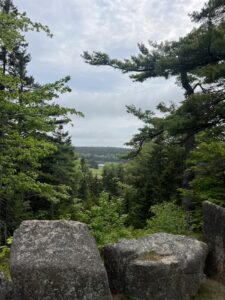
Environment
The 2024 Lancet standing Commission on dementia named 14 modifiable risk factors accounting for close to half of dementia cases worldwide, and air pollution is on the list alongside hypertension, smoking, and physical inactivity. The air in the room is a risk factor in the same sentence as blood pressure.
Joy
Zaninotto, Wardle and Steptoe tracked sustained enjoyment of life in the English Longitudinal Study of Ageing and found it associated with mortality at older ages, published in the BMJ. The earlier work by Steptoe and Wardle in PNAS had already linked positive affect to survival in older men and women. Enjoyment is not the reward for the other seven. It is measurable, and it is an input.
Stress
The IPD-Work Consortium pooled 197,473 participants across 13 European cohort studies, published in The Lancet, and found job strain associated with incident coronary heart disease across 1.49 million person-years. What your working life does to you shows up in your arteries, and for midlife women it is compounding with symptoms nobody at work is accounting for, which I wrote about in The Impact of Perimenopause and Menopause Symptoms at Work.
Relationships
A meta-analysis of 148 studies covering 308,849 people in PLoS Medicine found a 50 percent increased likelihood of survival among participants with stronger social relationships, an effect the authors place alongside well established mortality risk factors. The reverse is the part I know first hand. The years I spent in a relationship that was costing me went straight into the other seven wedges.
Purpose
A cohort of 6,985 adults over 50 from the Health and Retirement Study, published in JAMA Network Open, found life purpose significantly associated with all-cause mortality, and the authors named purpose a modifiable risk factor.
Small things, every day, are the whole mechanism
None of this asks for a transformation. Li and colleagues followed 78,865 women in the Nurses’ Health Study and 44,354 men in the Health Professionals Follow-up Study for as long as 34 years, published in Circulation, and scored five ordinary habits: never smoking, a healthy weight, thirty minutes a day of moderate to vigorous activity, moderate alcohol, and a decent diet.
Women with all five had a projected life expectancy at fifty of 43.1 years, against 29.0 years for women with none. Fourteen years. Thirty minutes a day is inside that number.
The paper also found a dose-response relationship for each behavior on its own, which is the part I keep coming back to. You do not need five. Four is better than three and one is better than none, and the wedge you add this month keeps counting for the next thirty years.
Why it Matters
I lost the last two days of August to being sick, and my wanting got very small. I wanted to stand up without the room moving and take Dalton, my dog, around the block. Nothing I had eaten and no workout I had skipped had anything to do with it. I was super stressed last week, working way too hard during a full moon week and when that piece of the pie went down, my body forced me to rest. Our bodies are never wrong, it’s time we listen.
Without health, nothing else matters.
References & Further Reading
Afshin, A., Sur, P. J., Fay, K. A., et al. (2019). Health effects of dietary risks in 195 countries, 1990–2017: A systematic analysis for the Global Burden of Disease Study 2017. The Lancet, 393(10184), 1958–1972. https://doi.org/10.1016/S0140-6736(19)30041-8
Alimujiang, A., Wiensch, A., Boss, J., et al. (2019). Association between life purpose and mortality among US adults older than 50 years. JAMA Network Open, 2(5), e194270. https://doi.org/10.1001/jamanetworkopen.2019.4270
Cappuccio, F. P., D’Elia, L., Strazzullo, P., & Miller, M. A. (2010). Sleep duration and all-cause mortality: A systematic review and meta-analysis of prospective studies. Sleep, 33(5), 585–592. https://doi.org/10.1093/sleep/33.5.585
Holt-Lunstad, J., Smith, T. B., & Layton, J. B. (2010). Social relationships and mortality risk: A meta-analytic review. PLoS Medicine, 7(7), e1000316. https://doi.org/10.1371/journal.pmed.1000316
Kivimäki, M., Nyberg, S. T., Batty, G. D., et al. (2012). Job strain as a risk factor for coronary heart disease: A collaborative meta-analysis of individual participant data. The Lancet, 380(9852), 1491–1497. https://doi.org/10.1016/S0140-6736(12)60994-5
Li, Y., Pan, A., Wang, D. D., et al. (2018). Impact of healthy lifestyle factors on life expectancies in the US population. Circulation, 138(4), 345–355. https://doi.org/10.1161/CIRCULATIONAHA.117.032047
Livingston, G., Huntley, J., Liu, K. Y., et al. (2024). Dementia prevention, intervention, and care: 2024 report of the Lancet standing Commission. The Lancet, 404(10452), 572–628. https://doi.org/10.1016/S0140-6736(24)01296-0
Mandsager, K., Harb, S., Cremer, P., Phelan, D., Nissen, S. E., & Jaber, W. (2018). Association of cardiorespiratory fitness with long-term mortality among adults undergoing exercise treadmill testing. JAMA Network Open, 1(6), e183605. https://doi.org/10.1001/jamanetworkopen.2018.3605
Steptoe, A., & Wardle, J. (2011). Positive affect measured using ecological momentary assessment and survival in older men and women. PNAS, 108(45), 18244–18248. https://doi.org/10.1073/pnas.1110892108
Zaninotto, P., Wardle, J., & Steptoe, A. (2016). Sustained enjoyment of life and mortality at older ages: Analysis of the English Longitudinal Study of Ageing. BMJ, 355, i6267. https://doi.org/10.1136/bmj.i6267