90% of People Still Want
a Human Trainer
A Number That Should Stop Every AI Fitness Founder Cold
Les Mills published their 2026 Global Fitness Report this year, drawing on responses from more than 10,000 consumers across five continents, and the headline finding is one that deserves serious attention from everyone building in fitness and longevity right now.
Only 10 percent of those surveyed prefer an AI-created workout over a human-led experience. Among Gen Z and Millennials, the most digitally native adults alive, that number rises only to 11 percent.
Among 28 to 40-year-olds, it drops to 9. lesmills
In the middle of a moment when AI fitness is being positioned as the inevitable future of wellness, nine out of ten people looked at the options and chose a human being.
I am building a stealth program, which launches this fall precisely to address this need, because I have believed fitness requires human encouragement, correction, and support.
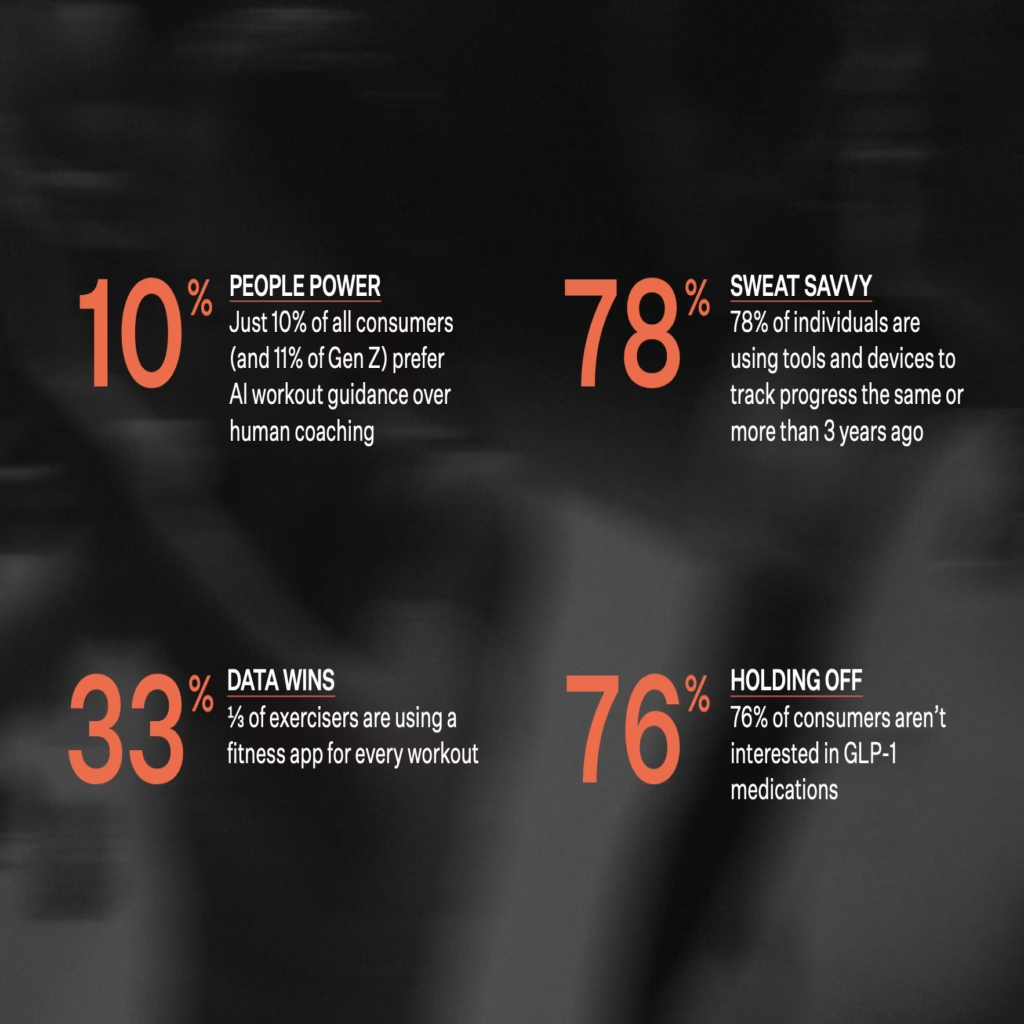
Just 10% of all consumers % (and 11% of Gen Z) prefer AI workout guidance over human coaching. –Les Mills
Trainers Know How You FEEL
What keeps happening in the wellness space is a conflation of two entirely different things: using technology to track health data, which people are genuinely enthusiastic about, and replacing the human coaching relationship with an algorithm, which they are not happy about!
People happily use apps and wearables to log progress.
But when it comes to what actually motivates us to change behavior and sustain it, human coaches are essential.
Les Mills Head of Research Bryce Hastings describes what he calls “the group effect,” the documented increase in enjoyment, satisfaction, and exertion that occurs when people exercise with and are coached by another person, and notes that the instructor is what makes that effect possible. lesmills
This finding shows up consistently across exercise science research: the relational context of coaching changes what people are capable of and how long they sustain it.
Deloitte’s 2024 survey on AI in healthcare found that 74 percent of U.S. consumers still trust clinicians most for health information, far more than AI tools, even as they increasingly use digital channels to supplement their knowledge.
An ISSA report on personal trainers found that “respondents repeatedly identified accountability, empathy, behavioral coaching, mental health support, and real-time form correction as aspects of their work that “cannot be replaced” by AI. A deep understanding of the human body, how it moves and functions, is a fundamental advantage that personal trainers bring, and this expertise cannot be replicated by AI.”
As someone who is a former certified personal trainer, and getting re-certified with NASM, I know that my most important role when coaching people was to encourage, and to create small wins for clients, to keep the motivation up. That skillset depends on being able to assess a client’s emotions, mood, physical capacity that day, and goals which requires listening, watching for gestures or facial expressions, and paying attention to how they are moving and where they may be overcompensating. I’e yet to meet an AI (yet lol) that can do that.
AI Can’t Help With Intimidation
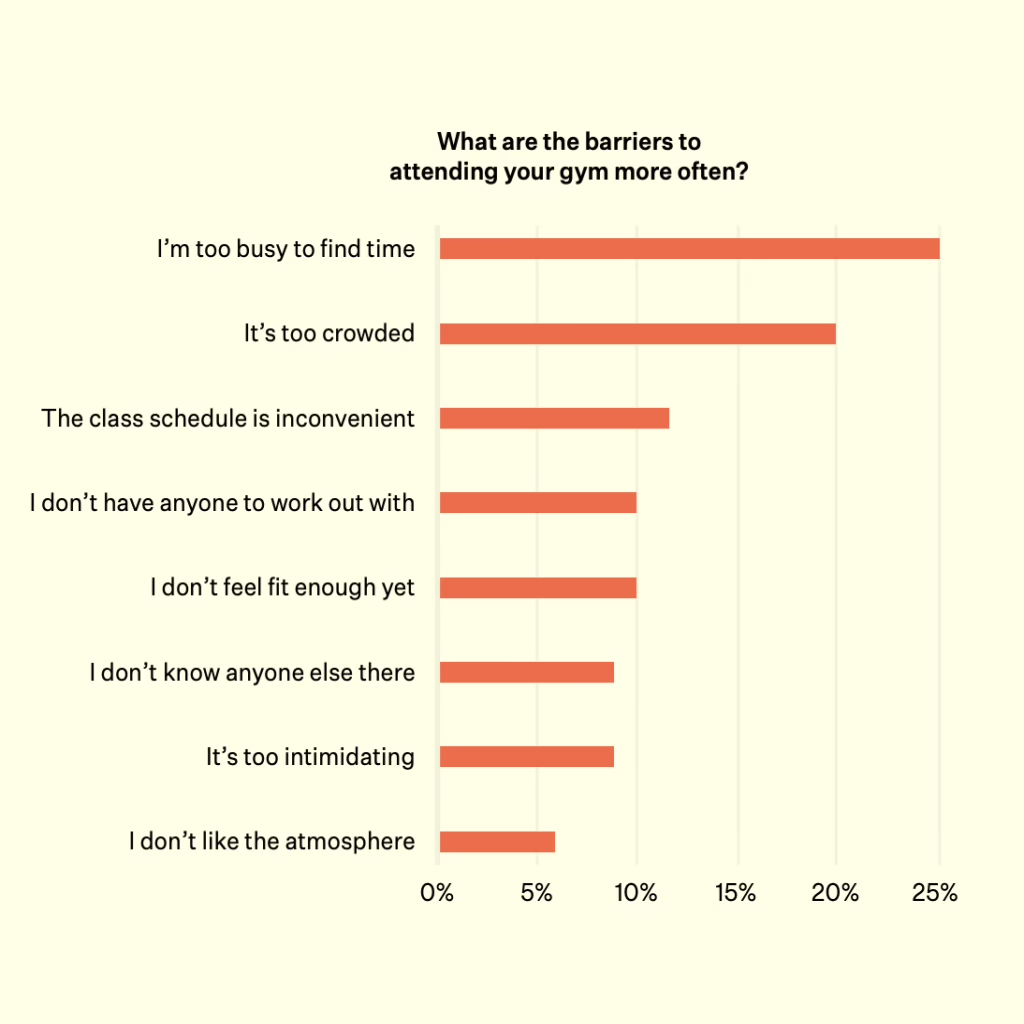
The report found that many people want to begin strength training, but 54 percent say conflicting advice leaves them unsure where to start, and 50 percent say they feel intimidated in the weights area. lesmills
Now you’d think AI trainers would be a solution to this, but I’ve found that when a client trusts their trainer, they listen to their guidance, and build confidence.
Getting people to do hard things, such as strength training requires someone who can see them, adjust in real time, and build the relationship that makes showing up feel worth it.
Personal Trainers: Part Fitness Coach Part Wellness Coach
I almost died in 2022. What followed was a deliberate reconstruction of my health, guided by people who understood what my body had been through and where I was trying to go. Shout out to my personal trainer, Kenny Vertus
I have since reversed my biological age by 15 years, measured across multiple biomarkers.
My personal training sessions with Kenny not only changed my body, but they completely changed my confidence. My sessions with him, 3 times a week for a year, became the highlight of my days.
The Les Mills report found that 94 percent people they surveyed consider the gym one of their most important wellness tools, and 74 percent say prioritizing mental health is a key part of their fitness motivation.
It’a always been physical and emotional–and that’s not something AI can replicate.
What To Do With This Information
If you are a founder, operator, or investor in fitness or longevity right now, the Les Mills data is worth taking seriously in how you are making product decisions:
Ensure Human Coaching is a Part of It
Technology should make human coaching more accessible and more effective, not replace it.
Build a Community
The research on group exercise and adherence is consistent: people stay with fitness when they feel they belong somewhere.
Include Wellbeing in Any Tool
Meditation, mindset exercises, and checking in on how someone feels can be included in tools to address the mind-body connection, which is key.
I’m Building Something To Address This
My new stealth startup is built to address some of this. It is based on human coaching, made accessible, grounded in the science of longevity and biological age, but also with wellbeing, honoring natural cycles, and mindset in mind.