Exercise is the Key to a Healthy Brain and Butt
(And Helps You Live Longer, Better)
Exercise is Brain Food
June is Alzheimer’s and Brain Awareness Month, a month dedicated to raising awareness about brain health and cognitive decline.
I remember growing up you were either a “brain” or a jock and you couldn’t really be both, but it turns out that working out builds a better brain, and a healthy brain fuels our workouts.
The recent science on exercise and our brain is extraordinary.
Exercise enhances memory, sharpens executive function, and lowers the risk of cognitive decline by stimulating the release of BDNF (Brain-Derived Neurotrophic Factor) and increasing blood flow to the brain.
Fast-twitch muscle fibers, which decline as we age, are associated with agility, preventing falls, boosting metabolism and more. Increasing and preserving these fibers raises BDNF and improves the brain’s processing speeds.
The hippocampus, the brain region most associated with memory, grows new tissue in response to consistent training.
Reducing Dementia Risk and Increasing Healthspan
All together, the risk of dementia drops by 30 to 50 percent in adults who move with intention, and people who exercise consistently live longer, often by one to seven years, and enjoy a significantly higher quality of life in their later years than those who remain inactive.
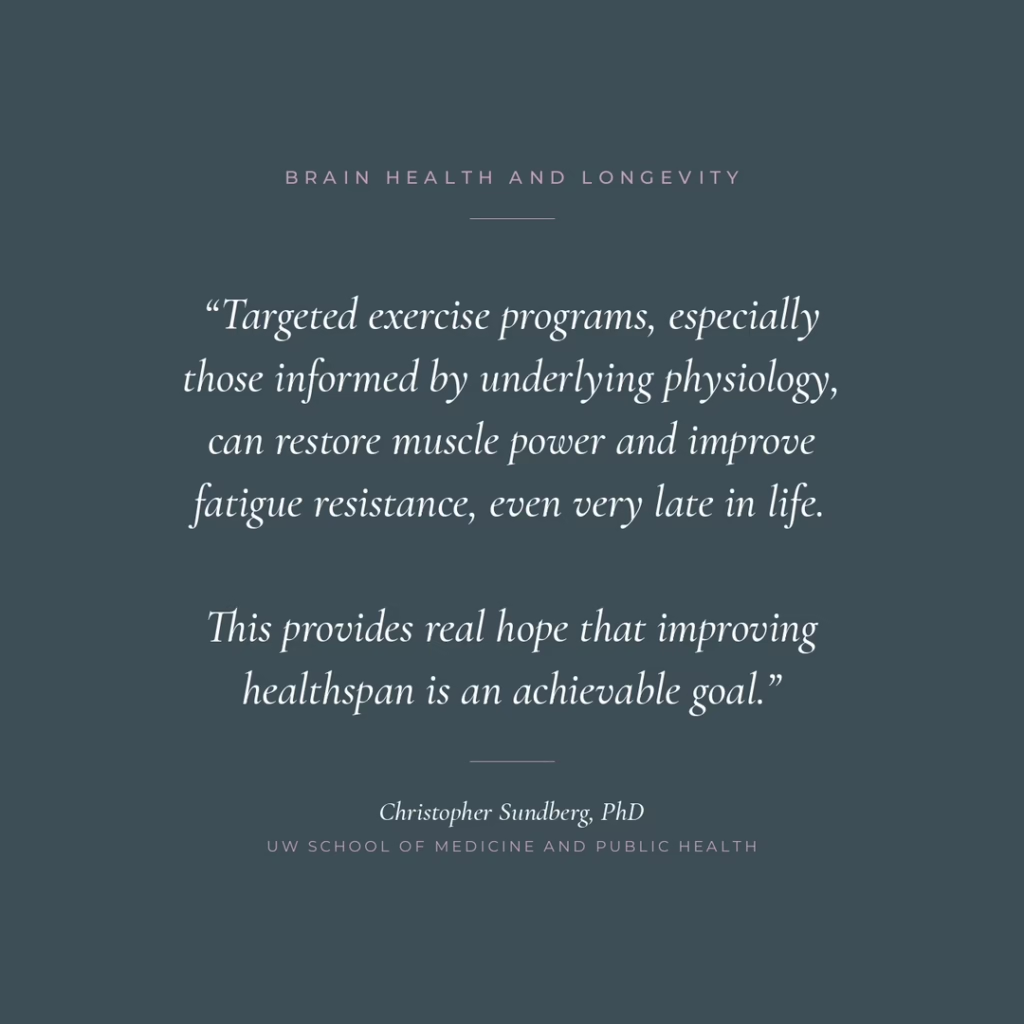
“Targeted exercise programs, especially those informed by underlying physiology, can restore muscle power and improve fatigue resistance, even very late in life. This provides real hope that improving healthspan is an achievable goal,” says Christopher Sundberg, PhD, Assistant Professor of Medicine, UW School of Medicine and Public Health.
BDNF and the Miracle-Gro Effect
The bridge between muscle and brain is BDNF (Brain-Derived Neurotrophic Factor).
“BDNF is like Miracle-Gro for the brain. It nourishes neurons like fertilizer,” says Dr. John Ratey, Harvard Medical School, author of Spark: The Revolutionary New Science of Exercise and the Brain.
BDNF is a protein that supports the growth of new neurons, strengthens the connections between existing ones, and protects the brain from the cellular damage that accumulates with age.
When BDNF is high, the brain is plastic, resilient, and capable of forming new pathways. When BDNF declines, which it does naturally with age (and dramatically with sedentary living), the brain becomes vulnerable to cognitive decline and dementia.
What raises BDNF most reliably is exercise, and the prescription depends on what you like to do and what you can do.
High-Intensity Bursts (6 to 8 minutes): Short, vigorous intervals (like sprinting or hard cycling) trigger a massive, immediate spike in circulating BDNF. This happens because intense exertion creates a rapid surge of blood lactate, which travels to the brain and flips on the BDNF switch.
Moderate-to-Vigorous Steady State (11 to 30 minutes): This is the clinical “sweet spot” for cognitive longevity. Spending 15 to 20 minutes at a pace where you can talk but not sing provides a sustained, balanced release of neuroprotective proteins.
Low-Intensity Continuous (30 to 40 minutes): If high-intensity work is out of reach due to injury or a medical condition, a steady-state path like a brisk walk or an easy swim works beautifully. It simply takes a bit longer (around 30 to 40 minutes) for the body to accumulate the baseline metabolic volume required to trigger the same chemical release.
The Fitness Compounding Effect
A landmark March 2026 study from University College London (UCL), published in Brain Research, adds an important layer to the dosing question. [1] Researchers tracked sedentary adults through a cycling program and discovered that building cardiorespiratory fitness completely changes how the brain responds to exertion.
While baseline, resting BDNF levels stayed roughly the same, the brain’s responsiveness improved. After becoming more fit, just a single 15-minute moderate workout triggered a substantially larger BDNF spike and significantly higher activity in the prefrontal cortex than the exact same workout had produced when the participants were unfit. [1, 2, 3]
As lead study author Dr. Flaminia Ronca noted, you benefit more from every single subsequent workout because your brain adapts to maximize the chemical payoff, even in as little as six weeks of consistent training. [1, 2, 3]
The X-Factor: Why “Green Exercise” Changes the Game
I used to prescribe hiking in the woods for many of my prior startup members, especially those in demanding jobs living in urban environments, or those with high cortisol.
Hiking in the woods is arguably the ultimate brain-enhancing workout. [1, 2]
When you walk on a flat, indoor treadmill, your environment is entirely predictable and your brain goes on autopilot. However, when you hike on a winding forest trail, your brain faces a complex obstacle course. You are constantly calculating spatial navigation, adjusting your balance on uneven terrain, stepping over roots, and processing dynamic sensory inputs like shifting light, bird calls, and terrain changes.
In neurobiology, this is known as environmental enrichment. While a treadmill walk releases the raw building blocks of BDNF, the complex spatial demands of a nature hike force the hippocampus to immediately put that BDNF to work, using it to forge new synapses, cement spatial memory, and stimulate neurogenesis (the birth of new brain cells). To maximize your cognitive reserve, don’t just move your body; challenge your surroundings.
Hiking in the woods is also known to decrease stress and anxiety and lower cortisol, all factors for increasing brain health.
The Muscle Your Brain Is Counting On
While endurance training builds the steady baseline of your brain’s chemistry, high-intensity power moves protect your neurological structural integrity. It all comes down to a dynamic feedback loop between BDNF and your fast-twitch muscle fibers.
Fast-twitch fibers are the powerhouses responsible for explosive agility, preventing falls, and driving a rapid metabolism. Unfortunately, these are the very fibers that decline most precipitously as we age. We can preserve and even rebuild them through plyometric movements, jumping, leaping, or high-effort burpees. [1]
The neurobiology of this relationship is a two-way street:
BDNF Feeds the Fiber: Emerging muscle physiology shows that BDNF acts as a localized growth factor (a “myokine”) that specifically signals the body to maintain and build fast-twitch muscle mass. [1, 2]
The Fiber Protects the Brain: Once built, these power-generating fast-twitch fibers act as your body’s ultimate glucose vacuum cleaners. Under intense demand, they burn through massive amounts of blood sugar, making them the primary regulators of overall insulin sensitivity. [1]
This metabolic cleanup is where your brain reaps the ultimate reward. Over the last two decades, researchers have increasingly referred to Alzheimer’s disease as “Type 3 Diabetes.” This term highlights how the exact same insulin resistance that causes metabolic dysfunction in the body causes devastating cellular starvation and neurological deterioration in the brain.
After two abdominal surgeries in 2022, the only way I lost the weight was through plyometric training and sprint work. Plus, I find it very fun and invigorating. Exercise should be something we look forward to.
Fast-Twitch Benefits
Preserving and increasing your fast-twitch fibers as you age has an impact on your weight, your healthspan, and your brain.
Elevates BDNF Levels:
Explosive movements (power, speed, and heavy lifting) stimulate the production of Brain-Derived Neurotrophic Factor, which drives neurogenesis and improves neuroplasticity.
Releases Beneficial Myokines
Vigorously contracting large muscle groups releases specialized proteins that travel through the bloodstream, cross the blood-brain barrier, and trigger long-term synaptic enhancement, improving memory and learning.
Improves the Mind-Muscle Connection
Fast-twitch movements demand intense, conscious neural activation. Repeatedly firing these pathways forces the central nervous system to adapt, which keeps the brain’s processing speed and neural reflexes sharp.
Better Focus, Faster Decisions
The BDNF flood from exercise produces immediate, real-world cognitive gains. According to data reported by Medical Xpress, post-workout BDNF spikes directly correlate with increased neural activity in the prefrontal cortex, the command center of your brain tasked with executive functions like:
Laser-sharp attention and resisting distractions
Fast decision-making under pressure
Emotional regulation and mood control
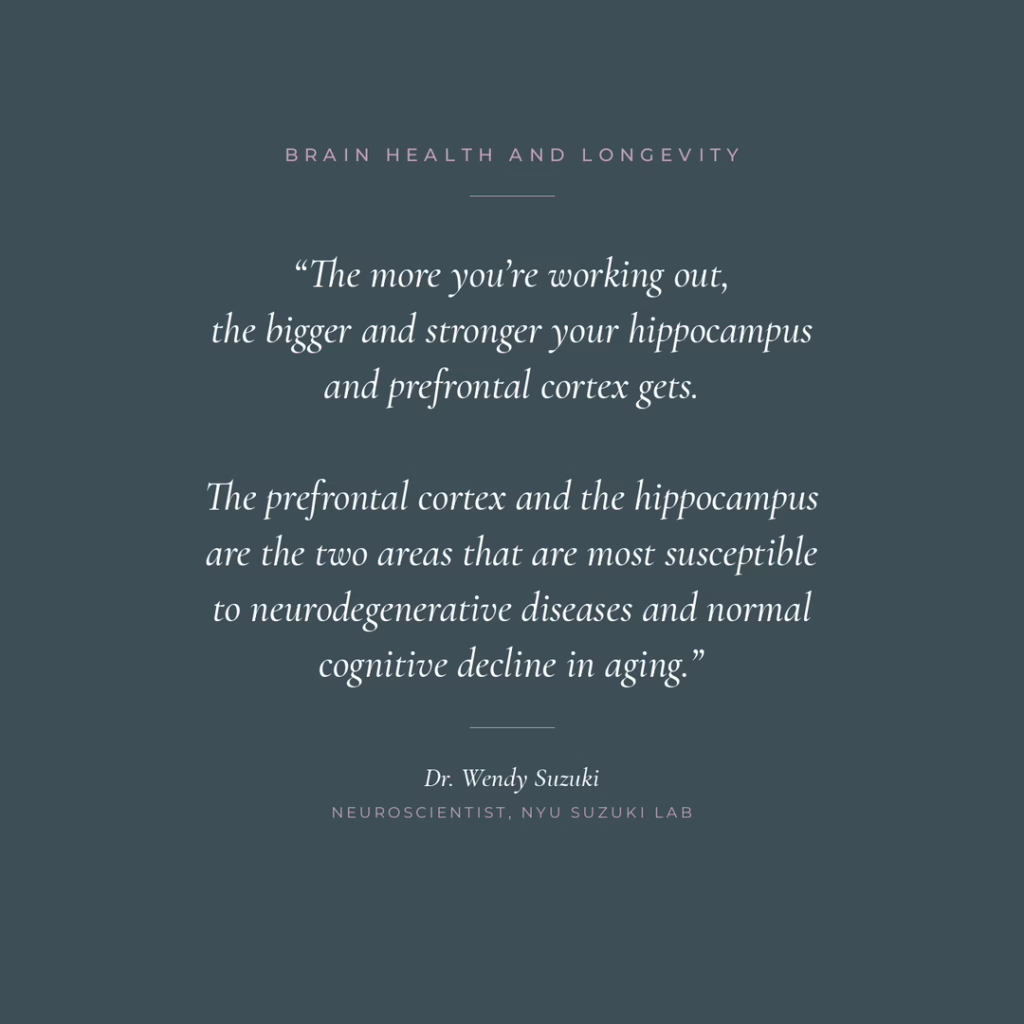
The neuroscientist Dr. Wendy Suzuki, who runs the Suzuki Lab at NYU studying the effects of exercise on the brain, has spent her career documenting what this looks like across populations and said, “The more you’re working out, the bigger and stronger your hippocampus and prefrontal cortex gets. The prefrontal cortex and the hippocampus are the two areas that are most susceptible to neurodegenerative diseases and normal cognitive decline in aging.”
For leaders, this is the difference between sustaining peak performance across a long career and watching cognitive sharpness fade in midlife.
Neuroplasticity, the brain’s ability to form new neural pathways, is the central currency of executive performance. The capacity to absorb new information, change strategic direction when the data shifts, and recover from setbacks faster than the competition all run on it.
Dr. Charles Hillman at Northeastern University, who has spent twenty years studying exercise and cognition, has found that “single bouts of moderate to vigorous physical activity have been shown to enhance cognitive performance, particularly executive control processes, including attention, working memory, and cognitive flexibility.”
A CEO at fifty-five who trains with intensity is building the neurological infrastructure that allows for complex thinking, strategic clarity, and creative output across the next twenty-five years.
When you exercise, you are actively training your brain to become a more efficient neuroplasticity machine.
For maximum cognitive return in the shortest time.
- Sprint intervals on a hill or bike
- Heavy kettlebell swings
- Plyometric jumps
For sustainable training across a busy week.
- Heavy lifts at challenging weight
- Hill repeats or boxing rounds
- Jump rope or cycling intervals
For recovery, injury, or simply preference.
- Brisk walking
- Swimming or hiking
- Easy cycling
Take Time For Your Brain
The slow word-loss, the moment of forgetting a family member’s name, the long decline that has shaped the fear of so many people watching their parents age, is a probability that responds to what you do with your body in the years before it shows up.
This June, take small steps to improve your brain health with exercise.
The brain you have at eighty is being built by the decisions you make about how you move at fifty.