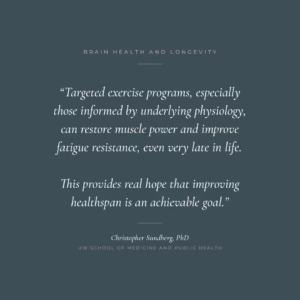
Why Zone 2 Isn’t Enough: Why Women Over 50 Need High-Intensity Workouts

Why Hiking and Other Zone 2 Exercise Is Not Enough
I went for a long hike today before this weekends predicted snowstorm. Hiking is such a wonderful exercise. Staying within zone 2 and other exercises such as walking, cycling, and other forms of steady aerobic activity are excellent for cardiovascular health, mitochondrial function, and overall daily energy, and they’ve long been promoted as the “best” exercises for women in midlife.
These exercises are awesome for stress reduction, nature bathing, and long-term movement habits, yet especially for women over fifty, endurance alone is not enough for weight loss, preventing muscle loss, and preserving agility.
For a long time, we’ve been told that stressing the body out with high intensity interval training (HIIT) causes a rise in cortisol, which we should avoid. But, as Stacy Sims, renowned exercise scientist says,
“HIIT does increase cortisol (like all exercise), but because it is such a strong stress to the body, the body responds in kind to reduce baseline cortisol levels with chronic exposure to high intensity.”
Multiple studies have shown that HIIT and other high intensity workouts such as plyometrics might be one of the keys to jump start our metabolism and zest for life.
High Intensity Workouts Are the Spice of Life
One of the most important considerations in midlife training is the preservation of fast twitch muscle fibers, particularly type IIa fibers.
These fibers can generate force rapidly, supporting joint stability, and allowing rapid responses to sudden physical demands. They also play a meaningful role in metabolism because they are highly responsive to insulin and contribute to glucose regulation.
Research demonstrates that type IIa fibers atrophy more quickly than slow twitch fibers with age, and this decline is closely linked to reductions in strength, power, balance, and functional independence.
Dr. Stuart Phillips, a leading expert in muscle physiology, has emphasized that “muscle adapts very specifically to the demands placed upon it. The fibers that are not challenged will gradually diminish, regardless of overall activity.”
Zone 2 exercise primarily recruits slow twitch fibers and aerobic pathways.
While this type of activity supports endurance, it does not provide the stimulus needed to preserve type IIa fibers. Women may maintain impressive aerobic capacity while losing the fibers that produce strength and power, leaving them more susceptible to fatigue, slower reaction time, and functional decline.
This is why moderate exercise alone doesn’t cut it as we age.
Preserving Muscle and Bone Density Through Perimenopause and Post-Menopause
High intensity and resistance-based movement, when applied intelligently, provides the stimulus type IIa fibers require. Sprint intervals, power-based exercises, and strength training recruit these fibers directly, stimulating anabolic signaling pathways that support muscle maintenance, metabolic function, and neuromuscular coordination.
Studies comparing high intensity interval training with moderate continuous exercise in adults over fifty have found improvements in insulin sensitivity, rate of force development, and neuromuscular coordination only in the groups performing higher intensity work.
Dr. Stacy Sims has highlighted the importance of designing training specifically for women, noting that hormonal changes during perimenopause and menopause influence how the body responds to stress, recovers, and adapts. In her words, “Women’s physiology requires both strategic intensity and adequate recovery. Short, focused periods of effort, when matched with sufficient rest, can preserve muscle and improve metabolic outcomes without overwhelming the system.”
This guidance is critical for understanding why endurance alone is insufficient, and why a deliberate focus on intensity and recovery can preserve vitality.
The benefits of high intensity extend beyond muscle fibers. Mechanical loading from resistance and power exercises stimulates bone remodeling and helps maintain bone density, a particularly important factor for women after menopause when fracture risk increases.
Preserving type IIa fibers also supports metabolic flexibility, as these fibers play a disproportionate role in glucose uptake and energy regulation. In practice, this translates into improved strength, agility, and confidence in daily life.
An Integrated Approach to Exercise and Recovery is Key:
Add some HIIT
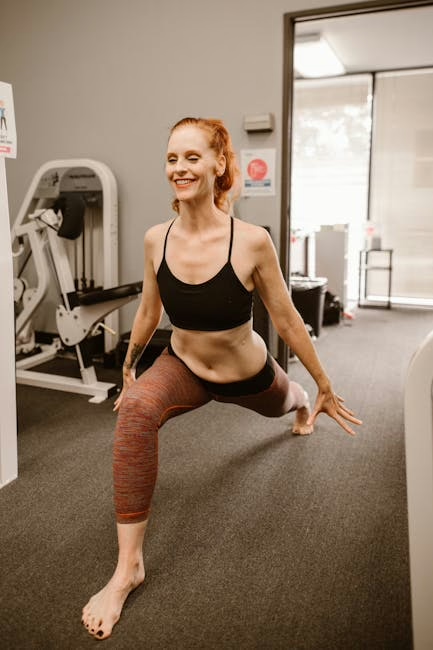
Short sprint intervals performed on a bicycle, rowing machine, uphill walk, or track, with full recovery between efforts to allow the nervous system to reset.
Resistance Training
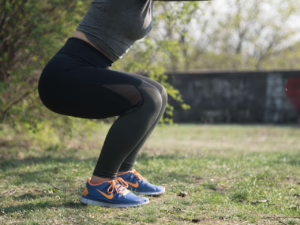
Resistance training two to three times per week, emphasizing compound movements such as squats, presses, pulls, and deadlifts, using loads that challenge strength without compromising form.
Add in Power Moves & Plyometrics
Power based exercises such as controlled jumps, step ups, or medicine ball throws to recruit fast twitch fibers safely and effectively.
Build in Recovery
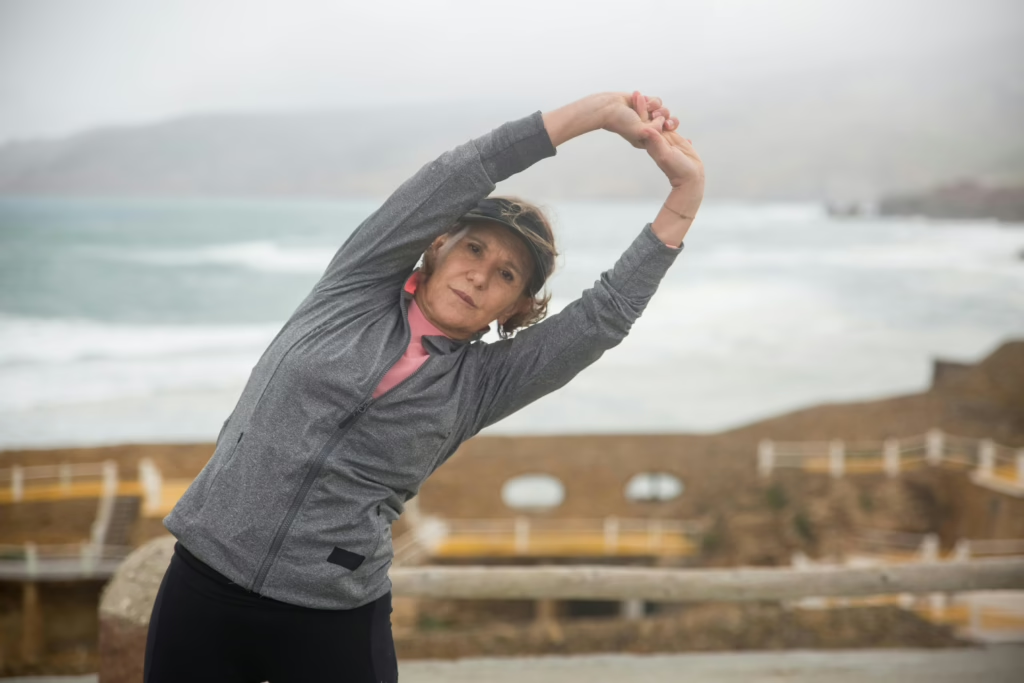
Active recovery sessions that include walking, yoga, or mobility work to enhance circulation, maintain range of motion, and support nervous system regulation.
Support Your Body
Prioritizing sleep, sufficient protein intake, and stress management to maximize adaptation and repair.
My Exercise Regimen (And a Basic Blueprint for Other Midlife Women)
Before embarking on any exercise regimen, be sure to speak with your doctor, an exercise scientist, or work with a Certified Personal Trainer (I’m re-certifying with the NASM exam as a CPT soon) to get a personalized exercise routine.
In general, I recommend a combination of:
1. Daily 30 minutes or more of Zone 2 activity to support cardiovascular function, contribute to mental clarity, and maintain a daily habit. This doesn’t have to be done all at once, and it can include things like walking your dog, or walking to and from the office parking lot to your job or doing a hike.
2. 1-2 more intense workouts each week for type IIa preservation and a full day of recovery between each big session.
3. 1-2 resistance training sessions for structural integrity.
I will sometimes do an hour of Zone 2 followed by some plyometric moves or strength training, and sometimes I’ll do a 3–4-hour hike followed by a lot of stretching.
An integrated approach to exercise supports strength, bone health, metabolic regulation, and confidence in movement.
And it helps keep you excited about exercise instead of falling into a boring routine or doing the same things over and over!
Strength, power, endurance, and recovery together provide us with a physiological foundation for freedom, energy, and confidence.