Why Energy Often Declines After 40 and How It Can Be Rebuilt

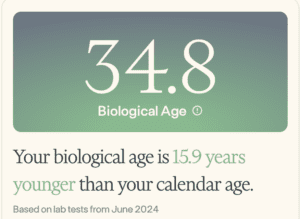
Age is Just a Number
Many people notice a gradual decline in energy sometime in midlife. It is often dismissed as “just aging,” but that explanation is both incomplete and misleading.
Energy decline often feels abrupt because the body compensates remarkably well for years. Sleep debt, stress, metabolic strain, and sedentary habits accumulate quietly. Eventually, the margin disappears and fatigue becomes noticeable.
Chronological age alone does not determine vitality. What changes after forty are a series of biological systems that respond strongly to lifestyle, stress, and environment, often quietly and cumulatively.
The encouraging truth is that these systems are adaptable. Energy loss is not inevitable. In many cases, it is reversible.
Boosting Energy By Revitalizing Cells
One of the primary drivers of reduced energy is mitochondrial efficiency. Mitochondria are responsible for producing ATP, the molecule that fuels nearly every cellular process in the body. Research shows that mitochondrial function declines with inactivity, chronic stress, poor sleep, and nutrient insufficiency, not simply with age itself.
A review published in Cell Metabolism found that reduced mitochondrial biogenesis and efficiency are strongly associated with sedentary behavior and metabolic dysfunction, both of which increase in midlife largely due to modern lifestyles rather than aging alone.
Hormonal signaling also changes during this period of life, particularly cortisol, insulin, estrogen, testosterone, and thyroid hormones. These shifts can affect glucose utilization, muscle mass, sleep quality, and perceived energy. Importantly, studies consistently show that movement, resistance training, and circadian aligned routines can significantly improve hormonal sensitivity and regulation at any age.


Inflammaging Can Be Reversed
Another overlooked factor is chronic low grade inflammation. Known as inflammaging in the literature, this process is not driven by age per se, but by accumulated exposures such as ultra processed foods, sleep deprivation, psychological stress, and environmental toxins. Elevated inflammatory markers such as CRP and IL 6 are strongly correlated with fatigue, cognitive fog, and reduced physical stamina.
Cognitive energy follows a similar pattern. Neuroplasticity does not disappear after forty, but it does become more dependent on intentional stimulation.
Research from Harvard Medical School shows that physical movement, novelty, and focused attention practices significantly improve executive function and mental energy well into later decades of life.
In other words, energy is not lost because the body is incapable. It is lost because key systems are under stimulated, overstressed, or misaligned.

Innovative Solutions for Modern Challenges
Train the brain, not just the body
Mental fatigue is often mistaken for physical exhaustion. Neuroplasticity research shows that focused attention practices, learning new skills, and combining movement with cognitive challenge significantly improve mental clarity and stamina.
Align daily life with purpose
Studies from the Blue Zones and large cohort analyses published in JAMA show that individuals with a strong sense of purpose report higher energy levels, better sleep, and lower mortality risk, independent of age.
Purpose acts as an organizing principle for behavior. When daily actions align with meaning, the nervous system functions more efficiently.
Reduce inflammatory load rather than chasing stimulation
Many people respond to fatigue with more caffeine, more intensity, and more pressure. This often worsens the underlying problem. Reducing inflammatory inputs through nutrition, stress regulation, and recovery is far more effective.
Re anchor sleep to circadian biology
Sleep quality often declines not because less sleep is needed, but because circadian rhythms are disrupted. Research published in Sleep Medicine Reviews demonstrates that consistent sleep and wake times, morning light exposure, and reduced evening light dramatically improve sleep depth and next day energy.
Restore movement as a metabolic signal
Movement is one of the strongest regulators of mitochondrial health, insulin sensitivity, and neuroplasticity. Studies show that even moderate resistance training two to three times per week significantly improves energy, muscle mass, and glucose regulation in adults over forty.
References & Further Reading
Sun, N., Youle, R. J., & Finkel, T. (2016). The mitochondrial basis of aging. Cell Metabolism, 23(4), 612–626.
Robinson, M. M., Dasari, S., Konopka, A. R., et al. (2017). Enhanced protein translation underlies improved metabolic and physical adaptations to different exercise training modes in young and old humans. Cell Metabolism, 25(3), 581–592.
Ferrucci, L., Fabbri, E. (2018). Inflammageing: chronic inflammation in ageing, cardiovascular disease, and frailty. Nature Reviews Cardiology, 15, 505–522.
Reid, K. J., Zee, P. C. (2009). Circadian rhythm disorders. Sleep Medicine Reviews, 13(2), 93–106.
Albers, M. W., Gilmore, G. C., et al. (2015). At the interface of sensory and motor dysfunctions and Alzheimer’s disease. Neurobiology of Aging, 36(11), 2725–2732.
Alimujiang, A., et al. (2019). Association between life purpose and mortality among US adults. JAMA Network Open, 2(5), e194270.