Perimenopause Is a Hormone And a Heart Story
Your Heart Health Matters During Perimenopause
When most women enter perimenopause, the conversation quickly narrows around hormones. Cycles shift, sleep becomes lighter, weight redistributes, moods feel unfamiliar, and the immediate focus turns to estrogen, progesterone, and whether hormone therapy is appropriate. What receives far less attention is that perimenopause is also a cardiovascular transition: and our heart health may hold the key to a smoother transition.
A 2025 review in the American Journal of Physiology examining vascular health across the female lifespan makes this clear. Estrogen and progesterone influence endothelial function, arterial stiffness, nitric oxide production, lipid metabolism, and inflammatory signaling across the menstrual cycle, during pregnancy, and through the menopause transition.
As estrogen fluctuates and gradually declines, and as follicle stimulating hormone rises in late perimenopause, measurable changes begin to occur in vascular structure and function.
Importantly, these changes begin before the final menstrual period.

Vascular Changes in Perimenopause
Large longitudinal studies show that during late perimenopause arterial stiffness increases more rapidly, carotid artery thickness progresses, and the ability of arteries to dilate in response to blood flow declines. Flow mediated dilation, a marker that mirrors coronary endothelial health, decreases as hormone patterns shift. These vascular changes cannot be explained by age alone. They reflect a biologic recalibration occurring in real time.
In everyday life this often looks subtle.
>>Blood pressure inches upward over several years.
>>Fasting glucose trends slightly higher than it once was.
>>LDL or triglycerides begin to shift.
>>Visceral fat accumulates more easily around the abdomen.
None of these changes are dramatic in isolation, yet together they signal that the cardiovascular system is adapting to a new hormonal environment.
The encouraging reality is that vascular biology remains highly responsive to lifestyle changes! Let’s talk about some of my favorite ways to influence our health during this transition.
Build Muscle as Metabolic Protection
Skeletal muscle is one of the most powerful regulators of glucose disposal and insulin sensitivity. Resistance training improves lipid patterns, supports nitric oxide signaling, and enhances endothelial function. In a stage where vascular aging may accelerate, maintaining and building muscle becomes protective.
Focus on:

Stabilize Blood Sugar Intentionally
Even modest elevations in glucose over time contribute to endothelial dysfunction and arterial stiffness. Because estrogen plays a role in glucose regulation, shifts during perimenopause can make metabolic stability more fragile.
Support glucose regulation by:

Monitor Trends in Cardiometabolic Markers
The research showing accelerated vascular changes in late perimenopause highlights the importance of early awareness. This is not about reacting to a flagged lab value. It is about watching direction.
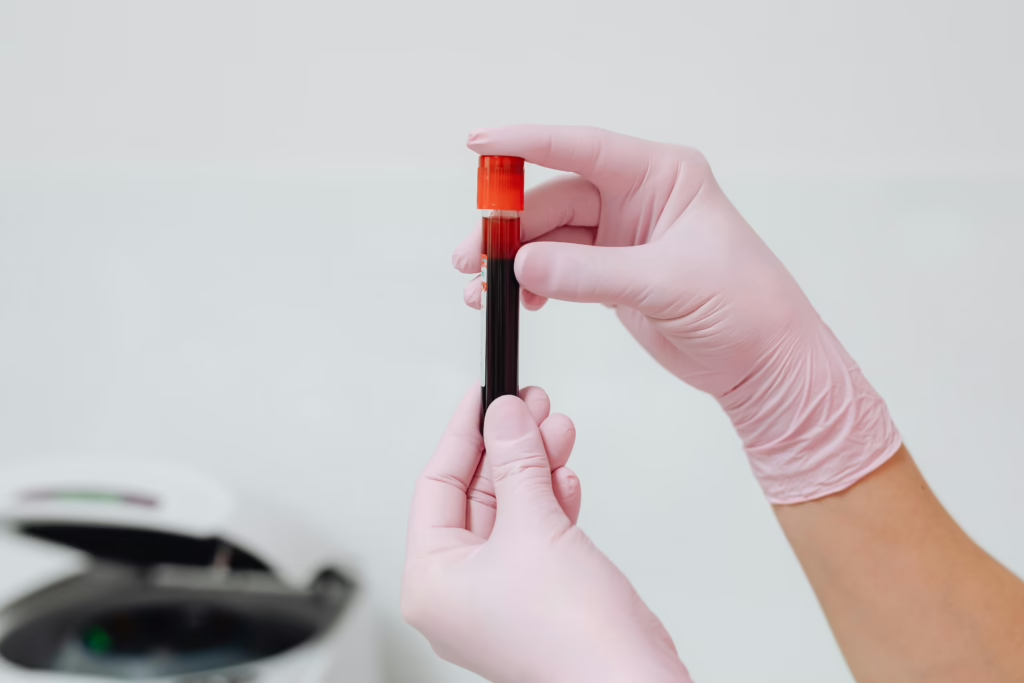
Pay attention to trends in:
Protect Sleep and Regulate Stress
Sleep disruption impairs endothelial repair and increases blood pressure variability. Chronic stress elevates sympathetic nervous system activity and cortisol, both of which contribute to vascular stiffness.
Support your nervous system with:

Love Your Heart So It Can Love You Back
When we expand the perimenopause conversation to include the heart, we start to address the full picture of our health needs.
Hormone therapy may be part of your plan, but hormones do not replace foundational metabolic strength.
Your heart is participating in this transition alongside your ovaries. Bringing it into focus allows you to act with intention rather than hindsight. With muscle, metabolic stability, restorative sleep, stress regulation, and biomarker awareness, this period can become a powerful pivot toward resilience (and dare I say, enjoyment! as we enter a new phase of life)..